Seven centuries at the edge of the sands
From the Hajri settlers of the 14th century to a wilayat that doubled in a decade.
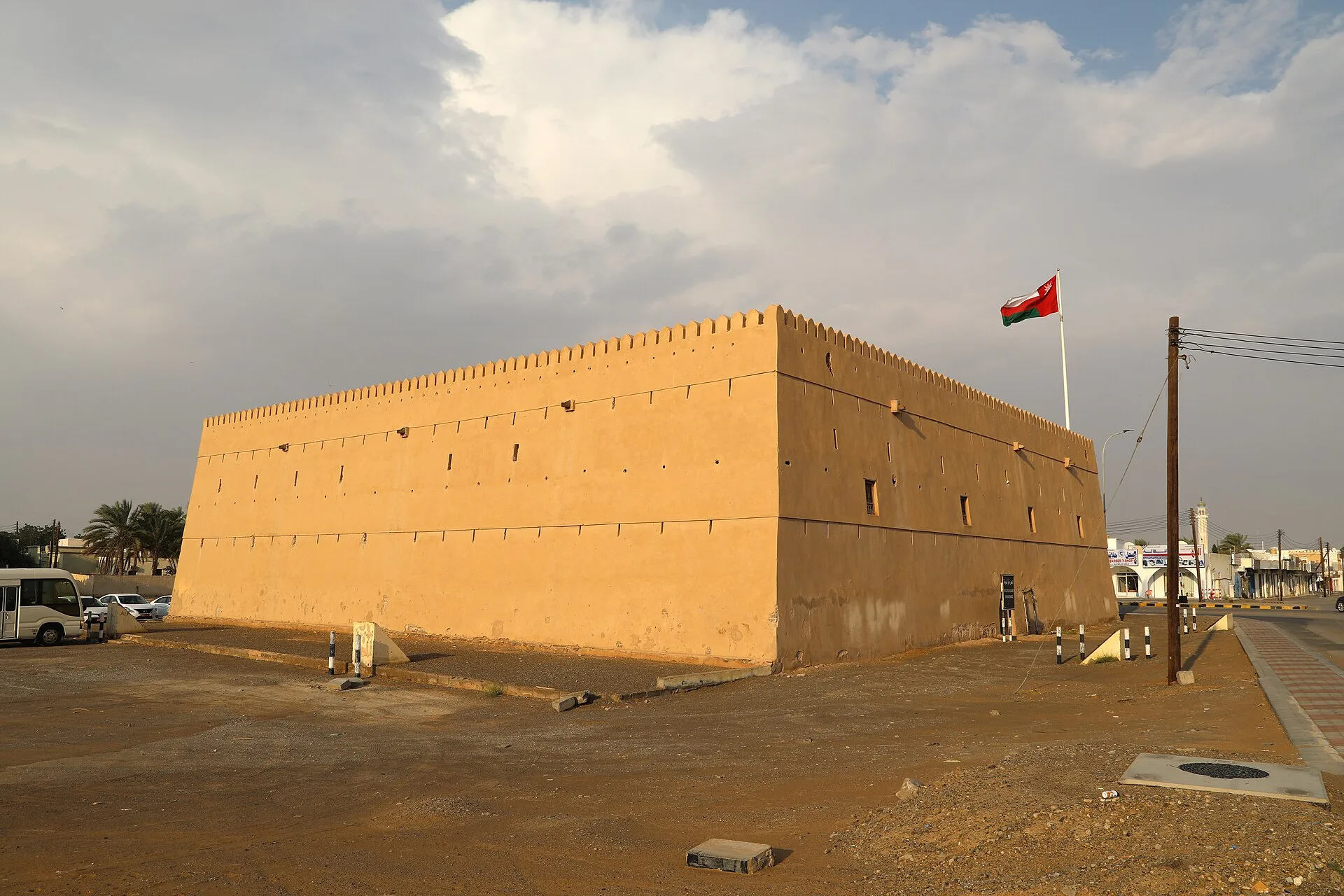
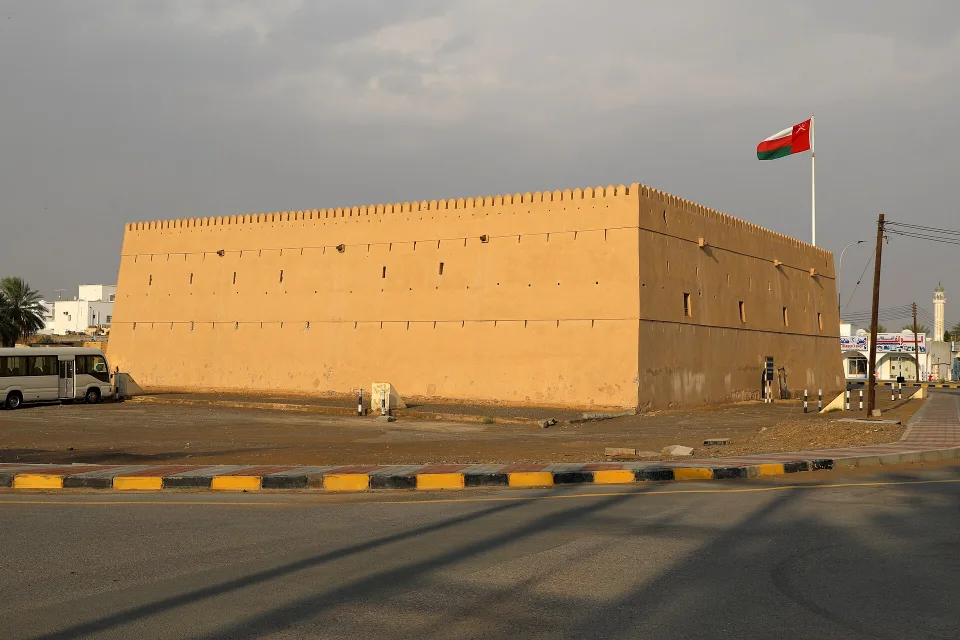
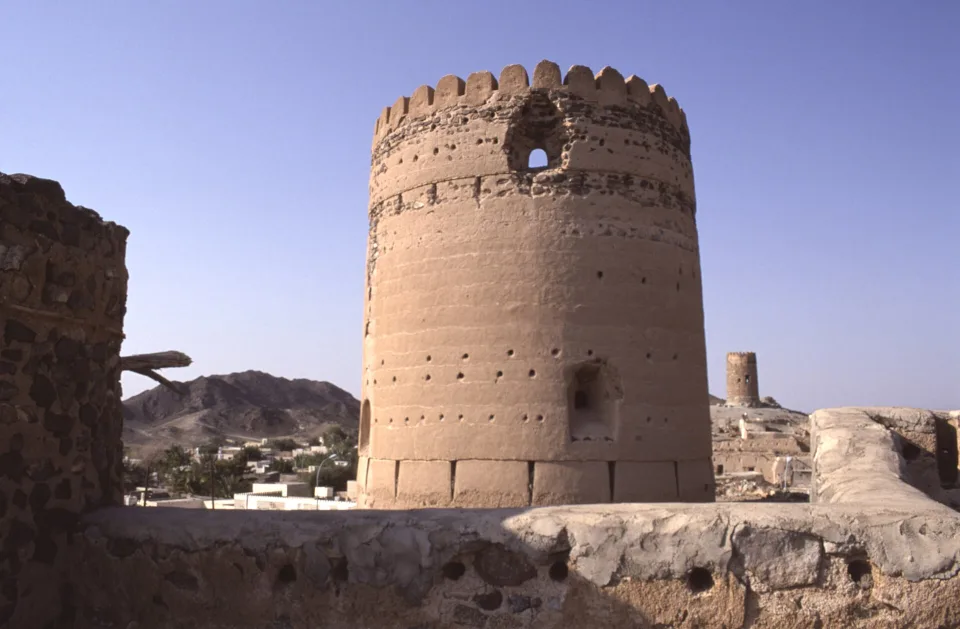
Local tradition says the name Bidiyah comes from "the beginning of settlement": an area of wells between Ibra and Ja'alan where people first built homes at the dune edge. In the 8th century AH (14th century CE) the Hajriyyun settled here and defended the oases, raising Al Mintirib Fort on its hill as one of the oldest fortifications in the governorate.
Water shaped everything. Seventeen Daoudi aflaj were cut along Wadi Al Batha, some running more than four kilometres with channels thirty metres underground, to reach the palm gardens of Al Mintirib, Al Wasil, Al Ghabbi, Al Dhahir and the villages inside the sands. The village names still tell the story: Al Wasil "connects" the water, Al Dhahir's falaj "appeared", and Al Hawiyah is "enclosed" by dunes on all four sides.
The forts saw real history. In 1813 the Saudi commander Mutlaq Al Mutairi was killed in Sharqiyah at the hands of the Hajriyin and lies buried in Al Wasil. Imam Azzan bin Qais restored Al Mintirib Fort in 1868–71, and in the 1980s the Royal Geographical Society made the town its base for the largest scientific study of the sands ever carried out.
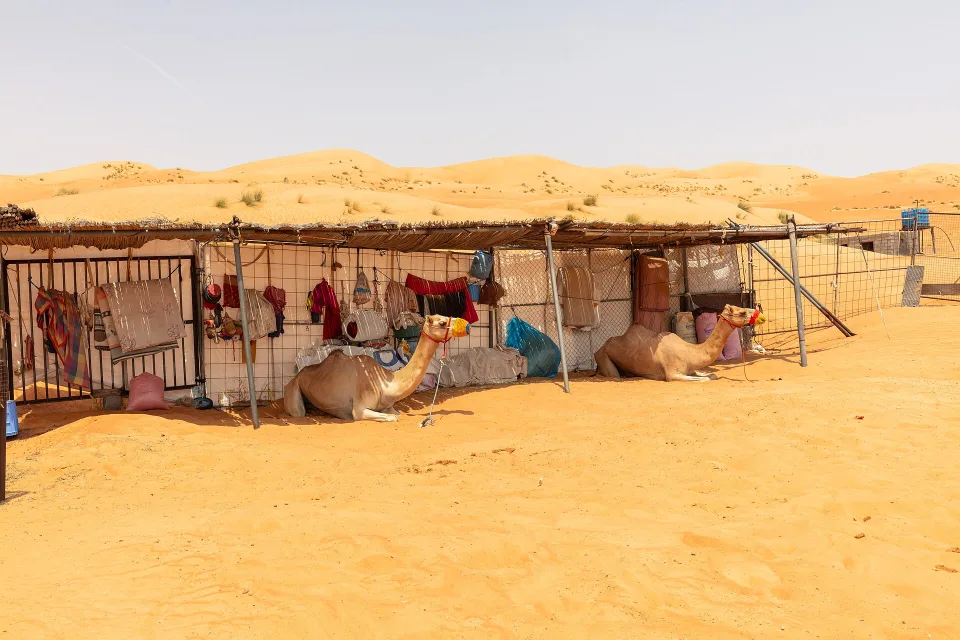
Today Bidiyah is Oman's desert capital: the camps, the camel tracks, the winter carnival and the Oman Desert Marathon bring more than a hundred thousand visitors in a single holiday week, while the date harvest, the Wednesday souq and the Eid "habta" markets keep the old calendar alive.
Then and now
-
~1300
The Hajriyyun arrive
Settlers of Hadhrami origin make Bidiyah their home in the 8th century AH and raise Al Mintirib Fort, in the Nabhani era, to guard the oases.
-
1500s
Al Wasil Fort
The first and largest fort of the wilayat is built at the north-western gate, with four towers and an inner souq.
-
1813
Battle in the Sharqiyah
The Saudi commander Mutlaq bin Muhammad Al Mutairi is killed by the Hajriyin; his grave is in Al Wasil.
-
1868
Restoration under Imam Azzan
Imam Azzan bin Qais Al Busaidi restores Al Mintirib Fort, seat of judges and rulers of the area.
-
1985
The Wahiba Sands Project
The Royal Geographical Society sets up in Al Mintirib: 30+ scientists, 32 studies, 16,000 invertebrates logged.
-
1991
The fort reopens
After government restoration, Al Mintirib Fort opens to visitors as a heritage landmark.
-
2008
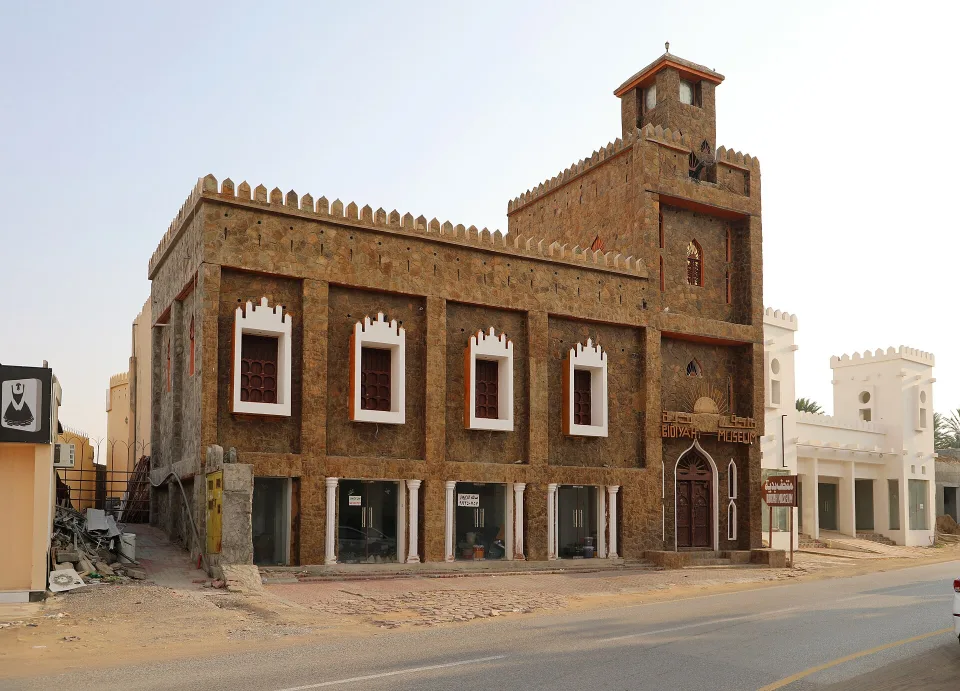
Bidiya Museum
A private museum opens opposite the fort with thousands of artefacts gathered by one collector.
-
2020
A wilayat doubles
The census counts 42,530 residents, twice the 2010 figure. Al Mintirib alone reaches 25,683.
-
2026
Bidiyah Sands Carnival
Al Wasil Fort gets a private operator, and the first Oman International Baja headlines a month-long desert carnival.
Heritage
By the numbers
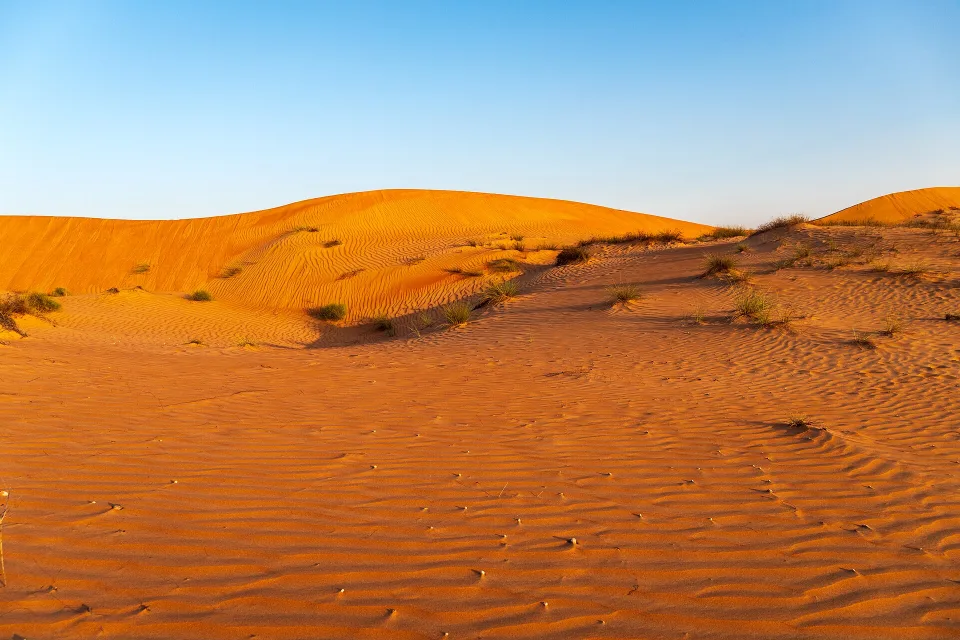
The northern mega-ridges, which the Bedouin call "habl" (rope), rise about 100 m and run up to 30 km. The winds that built them blew 20,000 years ago.
SourceThe red colour of the sand is an iron-oxide coating that takes centuries to form. In the far south the sand is almost white.
SourceA Royal Geographical Society expedition based in Al Mintirib (1985–87) recorded about 200 vertebrate species, 150+ plants and three beetles new to science.
SourceA single night's dew in the sands can equal half a millimetre of rain, enough for lichens, beetles and gazelles.
SourceAl Mintirib Fort is about 700 years old and roughly 900 m² in size. It reopened to visitors in 1991 after restoration.
SourceBidiya Museum holds around 18,000 artefacts collected by a single citizen since 2008, including Stone Age trays.
SourceAround 3,000 Bedouin live inside the sand sea. Al Wahiba is the largest tribe, and the desert still carries their name.
SourceAbout 120,000 visitors came to Bidiyah over the November 2024 National Day holiday, with camps over 90% full.
SourceMabsali dates are boiled for 15–20 minutes and sun-dried for 3–5 days. Camel caravans once carried them to Sur for export to India.
SourceThe Oman Desert Marathon runs 165 km from Al Wasil across the sands, including a night stage lit by solar lamps.
SourceIn winter, hot-air balloons lift off from Bidiyah at 5 am to catch the sunrise over the dunes.
Source